
Forum Replies Created
-
AuthorPosts
-
Lal
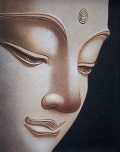
Keymaster1. There were no Buddha statues for many years after the Parinibbana of the Buddha. Soon after Buddha’s Parinibbana, stupas with Buddha’s remains (dhatu) were built.
- Statues of the Buddha were built hundreds of years after the Parinibbana of the Buddha. There were Buddhist Greek Kings in India after Alexander, for example, King Milinda. That is when the tradition of building Buddha statues started (Greeks are famous for making statues of their deities).
2. I asked Grok (Musk’s AI) about that, and the following is the answer:
“King Menander, also known as Milinda in Indian sources, was a Greco-Bactrian and later Indo-Greek King who ruled a large territory in the Northwestern regions of the Indian Subcontinent. While there are no direct historical records stating that King Menander started the practice of making Buddha statues, there is evidence that Greco-Buddhism flourished during his reign. Greco-Buddhist art, which began to appear around the 1st century BCE, combined Hellenistic artistic styles with Buddhist themes, resulting in statues of the Buddha that incorporated Greek artistic elements, such as realistic human forms and drapery.The earliest surviving Buddha statues discovered at the site of Jamal Garhi in ancient Gandhara date to the 1st or 2nd century CE, which is after the reign of King Menander. However, it is plausible that the Greco-Buddhist artistic tradition that led to the creation of these statues might have been influenced by the patronage of Buddhism by Indo-Greek kings like Menander. King Menander is noted for having become a patron and convert to Greco-Buddhism, and his reign is remembered for its connection to the spread of Buddhism in the region.”3. In the following video, a child describes her life as a Deva during the time of the Buddha (in Sinhala.) She says the Buddha was different than depicted in the current Buddha statues (@21 minutes).- As a Deva, she was able to “go inside” stupas and see dhatu (remains of the Buddha) enclosed in golden containers.
- She also says the Buddha statues we have today do not match the Buddha’s features. That makes sense. Statues of the Buddha were built hundreds of years after the Buddha’s Parinibbana.
4. Furthermore, worshipping symbols REPRESENTING the Buddha were there at the time of the Buddha. There is the following account in the Tipitaka (I forget the name of the sutta):
- People brought many things to offer to the Buddha at Jetavanarama. If the Buddha was not there, they went back disappointed. When Ven. Ananda mentioned this to the Buddha; the Buddha asked for a Bodhi tree to be planted there and instructed people to make offerings to that Bodhi tree. It was called “Ananda Bodhi. ” It was just a symbol representing the Buddha. One’s feelings are based on one’s reverence for the Buddha, not for the symbol.
5. Looking at a Buddha statue gives me peace of mind. If it is conducive to meditation, one could use it for that purpose.
4 users thanked author for this post.
April 27, 2024 at 12:15 pm in reply to: Regarding the website, is there something wrong with the HTTPS certificate? #49533KeymasterThanks for letting us know.
The website has the HTTPS certification, as seen from the web address.
- Has anyone else seen the same issue?
April 26, 2024 at 7:36 am in reply to: Discussion on “Cultivating Jhāna and Magga Phala – What Is the Difference?” #49516Keymaster“Is there any easiest way to attain jhanas?”
- It depends. Some people can get to jhanas easily. They had cultivated jhana in recent past lives. Still, one must get the mind to a calm state where sensual thoughts (kama sankappa) or immoral thoughts (akusala citta) do not arise. Anariya yogis do that by focusing the mind on a neutral object like the breath or a kasina object. Bhikkhus do that by avoiding akusala kamma/thoughts and contemplating the unfruitfulness/dangers of craving sensual pleasures.
- The same techniques must be used over a long time to attain jhana for those who do not easily get to jhana.
- The best approach is to engage in Vipassana (insight) mediation. One may or may not “cultivate jhana” (i.e., have the ability to get into a jhana at will) but one will make progress toward attaining a magga phala. Generating “jhana cittas” on and off (which likely happens to many people) is different from being able to get into a jhana at will (which requires spending time specifically to “practice the jhana“). I will have more information in the post to be posted later today.
“Should we just focus on the peace of mind while in the meditation and jhanas will appear?”
- Yes. Once the mind gets detached from the “kama loka,” it will automatically go to the higher “rupa loka” at least temporarily. But generating jhana cittas continuously (i.e., being able to get into “jhana samapatti“) requires practice.
- Anariya yogis‘ minds only temporarily detach from kama loka even if they can stay in jhana samapatti for long times. Thus, they can “lose the ability to get into jhana” if they go back to the “old ways” of engaging in akusala kamma/excessive sensual pleasures.
P.S. New post on jhana: “Jhāna – Finer Details“
2 users thanked author for this post.
KeymasterSuch a verse could be in several suttas.
The verse “And so, being myself liable to be reborn, understanding the drawbacks in being liable to be reborn, I sought that which is free of rebirth, the supreme sanctuary from the yoke, extinguishment—and I found it. Being myself liable to grow old, fall sick, die, sorrow, and become corrupted, understanding the drawbacks in these things, I sought that which is free of old age, sickness, death, sorrow, and corruption, the supreme sanctuary from the yoke, extinguishment—and I found it ” is in the “Pāsarāsi Sutta (MN 26).”
1 user thanked author for this post.
KeymasterYes. The concepts of anicca and anatta embed the critical idea that craving things in this world only leads to suffering.
- Nibbana (Arahanthood) is the end of suffering. It is not the end of a human, a Deva, an animal, or a Brahma; suffering continues as long as one of those labels can be assigned. A Buddha or an Arahant does not belong to any of those categories.
KeymasterYes. Understanding these critical concepts can be rewarding and exhilarating! The following is another way to look at it.
1. As explained in the post “What are Rūpa? Dhammā are Rūpa too!” dhammās are the kammic energies (kamma bija) that power future lives.
- We have collected possibly innumerable kamma bija in this and past lives. They can lead to rebirths in “good” and “bad” realms, but most are in “bad realms.” Even if born in a “good realm,” it will end, and one will start over.
- That is why “sabbe dhammā anatta.” No dhammā can get rid of suffering!
2. Those dhammā are created via sankhara! (That happens at the “upadana paccaya bhava” step in Paticca Samuppada.) This is a subtle/critical point: See “Bhava – Kammic Energy That Can Power an Existence” and “Upādāna Paccayā Bhava – Two Types of Bhava.”
- That is why engaging in the sankhara generation is useless/unfruitful/dangerous. It mainly leads to suffering, and even more importantly, it can NEVER stop future suffering!
- That is why “sabbe saṅkhārā aniccā” and “sabbe saṅkhārā dukkhā.“
Understanding the above two points can be rewarding. See, for example, “Buddha Dhamma – Noble Truths, Paṭicca Samuppāda, Tilakkhana.”
KeymasterI understand the issue. However, we must be able to understand the usage of words based on the context.
- Please carefully read “What are Rūpa? Dhammā are Rūpa too!” It explains the meaning of “dhammā” as “kammic energies bearing things in this world.” In particular, see #15 regarding the Abhidhamma connection.
- Also see #17 on “sabbē dhammā anattā.”
- Another confusion is to take “Dhamma” in “Buddha Dhamma” as dhammā. Buddha Dhamma refers to the teachings of the Buddha.
KeymasterGopinadh wrote: “Under Abhidhamma, Nibbana or Nirvana, is classified as an Asankhata Dhamma.”
- First, “Nirvāna” is the Sanskrit word for Pāli “Nibbāna.” The Buddha admonished that Sanskrit should never be used to explain Buddha Dhamma. I have changed the topic to make that change. See #10 of the post “Anicca, Dukkha, Anatta – Distortion Timeline.”
- Secondly, please refer to the reference in Abhidhamma where Nibbāna is defined as “asankhata Dhammā.”
April 22, 2024 at 7:43 pm in reply to: Discussion on “Cultivating Jhāna and Magga Phala – What Is the Difference?” #49478KeymasterYes. Those are good examples.
- Thank you for the references!
- In such cases, they had done much work in their past lives (fulfilling paramita).
1 user thanked author for this post.
April 21, 2024 at 8:25 pm in reply to: Discussion on “Cultivating Jhāna and Magga Phala – What Is the Difference?” #49473KeymasterI just posted a revised version of the following post: “Samādhi, Jhāna, and Sammā Samādhi.”
- I hope to post soon a rewritten version of the post “Jhāna and Magga phala – Very Different,” which I removed a few days ago.
- These complexities in jhāna illustrate why the Buddha stated that “jhānavisayo acinteyyo” OR “the subject of jhāna is fully comprehensible only to a Buddha.” See “Acinteyya Sutta (AN 4.77).” Four things are fully comprehensible only to a Buddha: “knowledge base of a Buddha and the subjects of jhāna, kamma vipāka, and the world (universe).”
- Hopefully, I am close to “getting things straightened out” to a reasonable level.
- Don’t hesitate to ask questions.
1 user thanked author for this post.
Keymaster“I focused here on what I understood as Dittha Dhamma Vedaniya Kamma, which is the Kamma which I think bears fruit in this life.”
- That is correct. Such “small kamma” can bring vipaka only during this life (“dittha dhamma vedaniya kamma.”)
- “Strong kamma,” like killing a human, can bring vipaka into lives well into the future. They are “aparapariya vedaniya kamma.”
April 19, 2024 at 8:22 pm in reply to: Discussion on “Cultivating Jhāna and Magga Phala – What Is the Difference?” #49458Keymaster1. I realized that I had not paid attention to the fact that “Sammā Samādhi” can be cultivated ONLY by Noble Persons (Ariyas).
- Thus, there are two categories of jhāna: Anariya jhānās can be attained by suppressing kāma rāga. In contrast, Ariya jhānās are attained by removing kāma rāga, i.e., kāma rāga samyojana and kāma rāga anusaya will be removed even in the first jhāna.
2. Thus, my previous post entitled “Jhāna – There Is No Separate Category of ‘Ariya Jhāna’” is not correct.
- Also, the new post “Jhāna and Magga phala – Very Different” I posted earlier today needs to be revised.
3. However, the following post I had written previously on this subject is correct. I have posted it as the current post: “Power of the Human Mind – Ariya Jhānā“
- I will revise the post “Jhāna and Magga phala – Very Different” and post it next week. In the meantime, please feel free to ask questions if I confused you. My apologies for the confusion.
- Still, this clarification is necessary because many people do not realize that kāma rāga samyojana must be removed to get to even the first Ariya jhāna.
2 users thanked author for this post.
KeymasterThank you, Ravi, for sharing your experience.
- However, that incident is insignificant compared to serious kamma we may have committed in our previous lives (and even in this life.)
- We must remember that one can overcome any kamma vipaka (except for anantriya kamma) in this life itself.
- Angulimala killed almost a thousand people and attained the Sotapanna stage in a few minutes. He attained the Arahanthood within a couple of weeks. See “Account of Angulimāla – Many Insights to Buddha Dhamma.”
1 user thanked author for this post.
KeymasterThank you! I will try to watch them when I have the time.
- The bottom line is that scientists have tried to probe the structure of “matter” to the smallest possible levels. They have found that at that sub-microscopic level, the distinction between “matter” and “energy” is blurred.
- It is impossible to “pin down” the fundamental nature of “matter,” as the Buddha pointed out 2600 years ago!
- See “Bhūta and Yathābhūta – What Do They Really Mean.”
1 user thanked author for this post.
KeymasterI have revised the chart in my above comment to make it a bit more clear that an anariya is not “free from dukkha“ after attaining jhana or samapatti; i.e., no realm in the 31 realms within this world can provide refuge from suffering.
- Release from dukkha is possible ONLY by fully comprehending the Four Noble Truths/Paticca Samuppada/Tilakkhana.
- That necessarily involves Vipassana or “cultivating panna (wisdom).” That means understanding the fundamental concepts.
- That understanding starts at the Sotapanna Anugami stage, grows through the Sotapanna, Sakadagami, and Anagami stages, and culminates in the Arahant stage.
P.S. Understanding “distorted saññā” can help get to the Sotapanna and higher stages of Nibbana.
- See “Sotapanna Stage via Understanding Perception (Saññā).”
- The main point is that most vedana (that we attach to) are “mind-made vedana” based on “distorted saññā.“ See, for example, “ Mūlapariyāya Sutta – The Root of All Things” and “Fooled by Distorted Saññā (Sañjānāti) – Origin of Attachment (Taṇhā)”
1 user thanked author for this post.
-
AuthorPosts


